
Article
Will It Fit? How to Measure Furniture for Doorways, Stairs and Elevators Before an Apartment Move
Learn how to measure furniture, doorways, hallways, stairs and elevators before an apartment move—and avoid surprises on moving day.
Published
November 18, 2026
Updated
November 18, 2026
Category
tips
Author
MoveMate Editorial Team
Moving and relocation guidance
The MoveMate Editorial Team creates practical moving guidance based on the information customers and moving professionals need to plan clear, efficient moves across Canada.

Your sofa fits comfortably in the living room—but will it fit through the apartment door?
Many renters forget to ask that question until moving day. A large piece of furniture may fit in the new room yet be impossible to carry through the building entrance, elevator or narrow turn outside the apartment.
Measuring in advance helps you identify problem areas, determine whether furniture must be disassembled and give your movers accurate access information. It can prevent delays, damage and the unpleasant discovery that your sofa will not make it into your new home.
Quick answer: To determine whether furniture will fit, measure its width, depth, height and diagonal depth, then compare those figures with the usable width and height of every doorway, hallway, stair landing and elevator. Check that there is also enough room to tilt and rotate the item at corners and on both sides of each opening.
Measure the furniture at its widest points
Use a rigid metal tape measure and record four dimensions for each large item:
- Width: The longest horizontal measurement, such as the distance between a sofa’s arms.
- Depth: The distance from the front of the item to its furthest point at the back.
- Height: The distance from the floor to the highest fixed point.
- Diagonal depth: The diagonal measurement across the item’s side profile.
Measure the actual furniture rather than relying entirely on dimensions from a product page. Handles, trim, curved backs and reclining mechanisms may extend beyond the main frame.
For sofas and armchairs, remove loose cushions and check whether the feet unscrew. Record the height both with and without them. Measure sectional sofas as individual modules if they can be separated.
For bookcases, dressers and wardrobes, include decorative trim and handles unless they can be safely removed. Emptying drawers makes furniture lighter, but it does not change whether the frame can clear an opening.
MoveMate’s guide to preparing furniture for a move covers additional ways to protect and organize large items before the movers arrive.
Check the entire route—not just the apartment door
Your furniture must pass through every section of the route at both addresses.
Walk from each item’s current position to the moving truck. Then inspect the route from the truck to the room where the item will be placed in the new apartment.
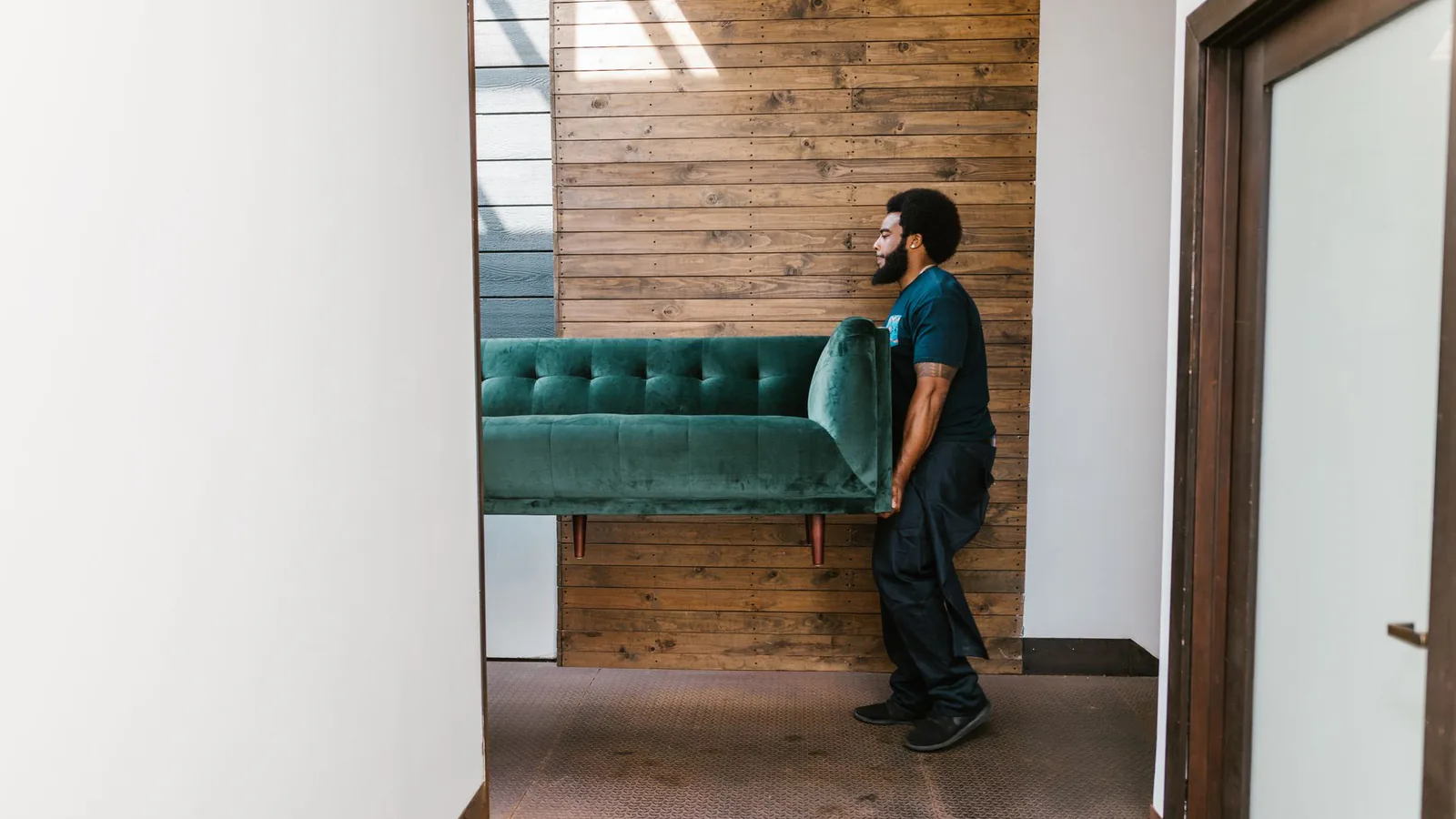
Check:
- Building and apartment entrances
- Vestibules and security doors
- Hallways and sharp corners
- Stairways and landings
- Elevator doors and interiors
- Low ceilings and hanging fixtures
- Railings, radiators and wall-mounted objects
- Loading docks and service corridors
Record the narrowest width and lowest overhead clearance. Photos and a simple sketch can make difficult areas easier to explain to your mover.
How to measure a doorway correctly
Open the door as far as possible and measure the usable opening, not the outside of the frame.
Record:
- The clear width at the narrowest point
- The clear height below the frame or door closer
- The distance from the doorway to the opposite wall
- The hallway width on both sides of the opening
The open door, hinges, handle or hydraulic closer may reduce the available space. If the furniture must turn immediately before or after the doorway, the distance to the opposite wall can be as important as the opening itself.
Measure all relevant doors, including the building entrance, service entrance and final room door. Do not assume that interior doors have identical dimensions.
For a helpful visual overview, see Crate & Barrel Canada’s furniture measuring guide, which illustrates how doorways, turns and stairwells affect the delivery path.
Account for tight corners
A sofa may fit down two hallways individually and still be unable to turn between them. Corners require enough open space to rotate and tilt the item.
At every 90- or 180-degree turn, measure the width of both hallways, the dimensions of the corner or landing, the ceiling height and the distance to the opposite wall. Note railings, fixtures and other obstructions.
You can use painter’s tape to mark the furniture’s footprint on the floor. For a questionable turn, cut a piece of cardboard matching the furniture’s side profile and try rotating it through the space. This will not reproduce every three-dimensional movement, but it can expose an obvious problem.
How to measure a narrow stairway
Measure the usable stair width between the wall and the inside edge of the railing—not from wall to wall if the railing occupies part of that space.
Also check:
- Ceiling height above the bottom and top steps
- Overhead clearance along the staircase
- The length and width of each landing
- Corner-to-corner clearance at stairwell turns
- Fixed railings and newel posts
- Light fixtures, sprinklers and sloped ceilings
A sofa may be narrow enough for the steps but too long to stand upright under the ceiling. A tall wardrobe may reach the landing but lack enough room to rotate into the next flight.
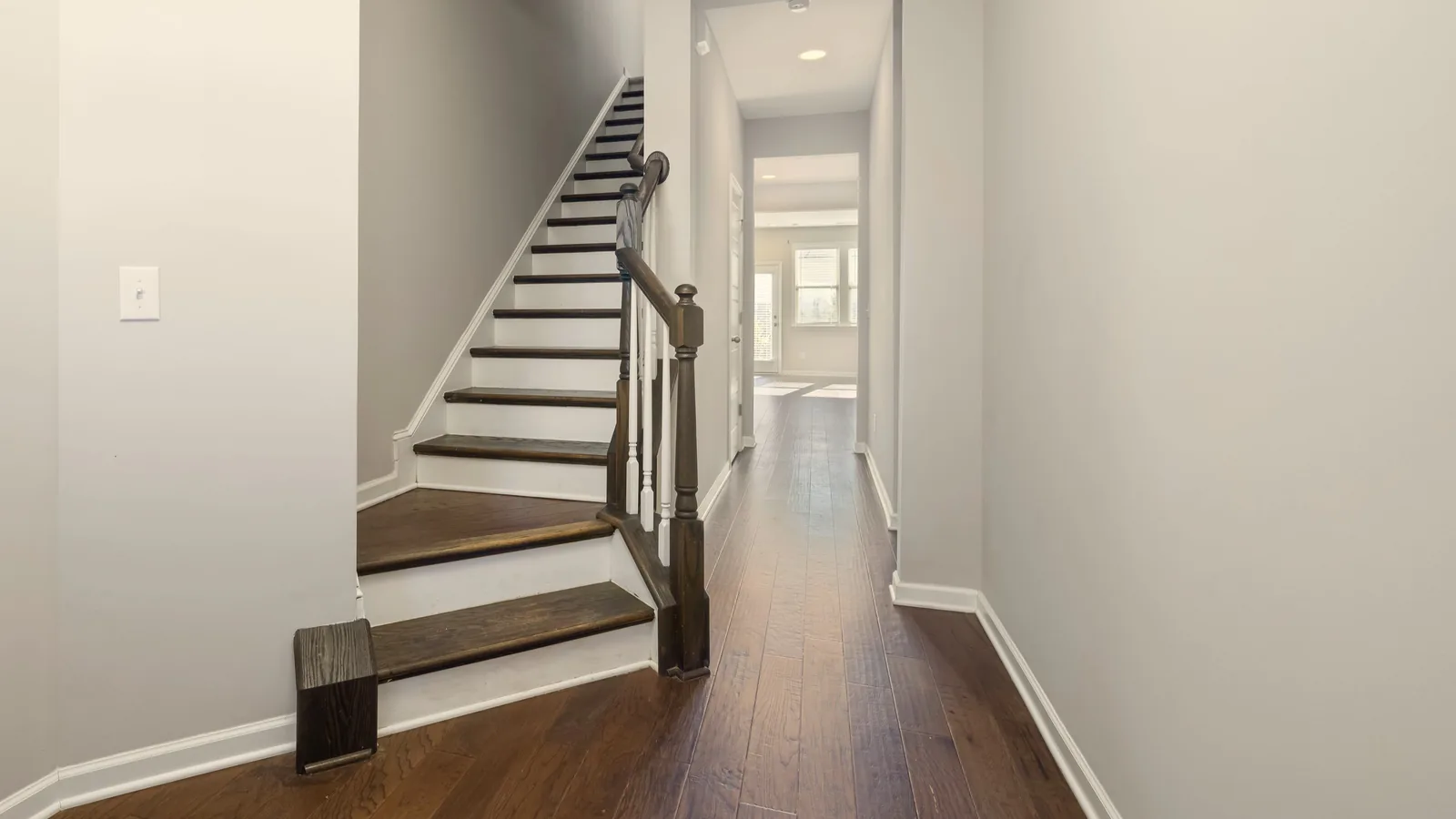
Switchback staircases with 180-degree turns require extra attention. Take photos and share the measurements with your mover rather than assuming the item can be angled through.
Do not remove a railing or common-area fixture without the landlord’s or property manager’s approval.
How to measure an elevator
Confirm whether the building requires moves to use a service elevator. Apartment and condo buildings may require reservations, restrict moving hours or install protective padding before the crew arrives.
Measure the elevator’s:
- Door width and height when fully open
- Interior width, depth and height
- Space between handrails
- Floor-to-ceiling diagonal
- Interior corner-to-corner distance
The elevator door is often narrower than the cab, while interior railings reduce the usable space. Check whether the doors can be held open during loading or whether building staff must operate them.
Do not forget the elevator lobby. Furniture may fit inside the cab but still be impossible to line up with the door because of a narrow corridor or sharp turn outside it.
How to tell whether a sofa will fit
There is no single measurement that guarantees a sofa will fit through a complicated route. Depending on its shape, movers may carry it upright, place it on its back or hook one end around the doorframe.
Use this process for an initial fit check:
- Compare the sofa’s height, depth and diagonal depth with the doorway’s usable width and height.
- Confirm that its full length can be accommodated in front of the doorway.
- Check for enough ceiling space to stand or tilt it.
- Make sure there is room to rotate it on the other side.
- Repeat the check for every hallway turn, stair landing and elevator.
Diagonal depth is useful when evaluating whether a sofa can pass through an opening while tilted. However, it does not account for nearby walls or the room needed to rotate the sofa.
Avoid planning around an exact, millimetre-perfect fit. Movers need working space for their hands and protective blankets, and upholstered furniture may not have perfectly straight edges.
What to do if the furniture will not fit
If the measurements do not work, consider:
- Removing detachable feet, cushions, drawers or shelves
- Separating modular or sectional pieces
- Temporarily removing a standard door from its hinges, with permission
- Using another approved building entrance
- Arranging professional disassembly and reassembly
- Selling, donating or replacing the item
Do not force furniture through an opening. This can damage the item, walls, flooring and doorframe—and renters may be responsible for damage to common areas.
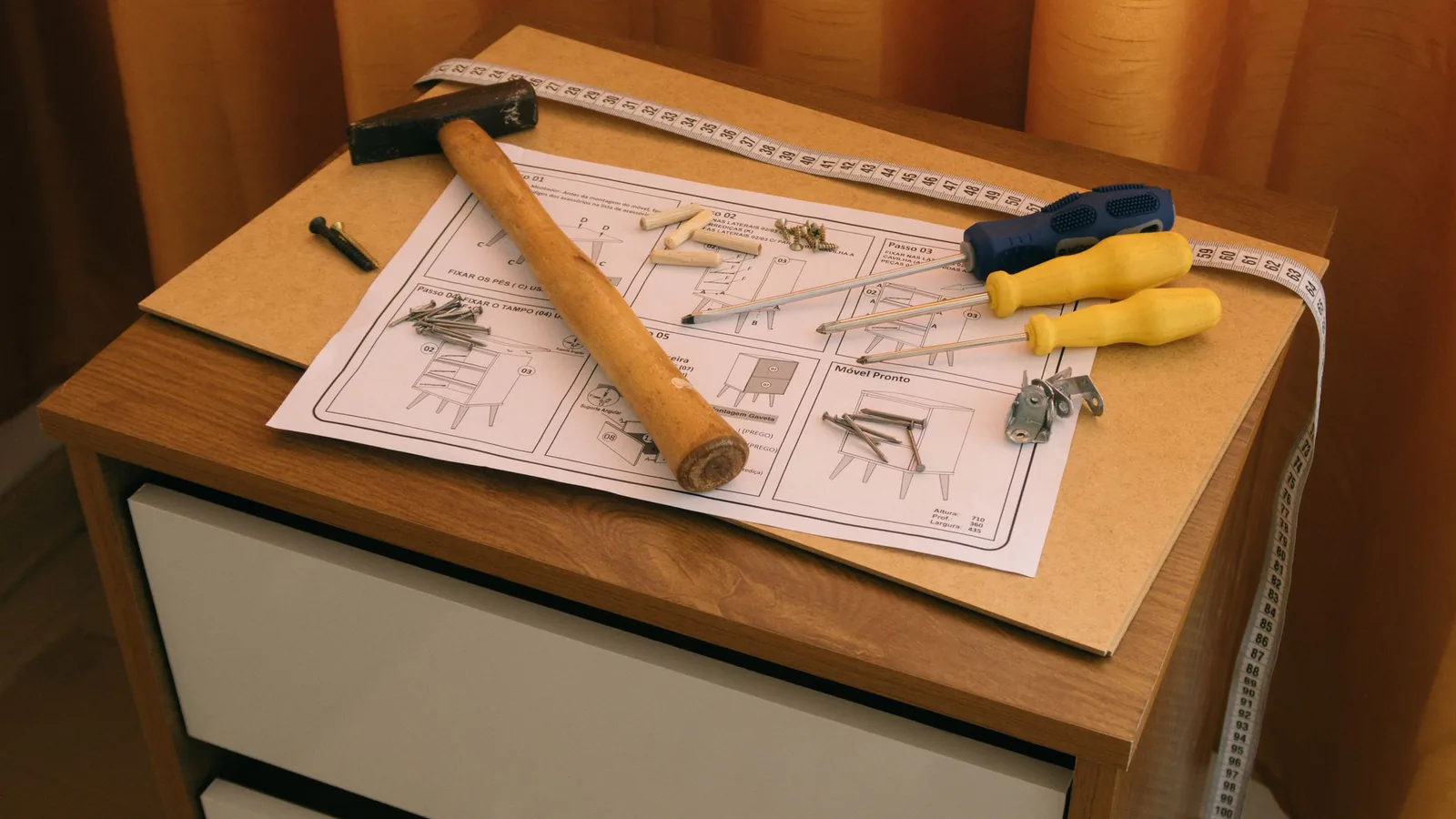
Furniture should only be dismantled when you understand its construction. Some upholstered, antique or particleboard pieces may not tolerate disassembly and reassembly well.
When to hire professional movers for bulky furniture
Professional furniture movers are worth considering when an item is heavy, fragile, valuable or difficult to manoeuvre safely. They may also be the better choice when moving furniture through narrow stairways, tight landings or small apartment elevators.
Experienced apartment movers can assess the route, determine the appropriate carrying position and arrive with equipment such as moving blankets, dollies and straps. They may also handle standard furniture disassembly and reassembly when arranged in advance.
If access looks difficult, send the movers measurements and photos before booking. MoveMate’s apartment moving services page explains how elevators, stairs, parking and building rules can affect the planning and price of an apartment move.
Use your measurements to get a more accurate moving quote
Measurements also help movers understand the scope of the job. Stairs, elevator restrictions, long carrying distances and oversized furniture can affect the crew size, equipment and time required.
When comparing quotes, provide:
- A complete furniture inventory
- The number of stair flights
- Elevator dimensions and reservation times
- Photos of narrow entrances or landings
- Parking and loading restrictions
- Furniture requiring disassembly
- Heavy, fragile or unusually large items
MoveMate allows you to compare quotes from vetted movers that carry cargo and liability insurance, review available pricing and book your selected mover online. Including accurate access details in your request helps the mover plan for the building rather than discovering its limitations on arrival.
Insurance terms and protection for individual belongings can vary, so review the coverage shown with each option. The Government of Canada’s moving advice also recommends providing a complete inventory, obtaining a written estimate and confirming insurance details before booking.
Read also: The dos and don’ts of hiring movers
Pre-move measuring checklist
Before moving day, confirm that you have:
- Measured large furniture at its widest points
- Recorded the diagonal depth of sofas and chairs
- Identified removable parts
- Checked the route at both addresses
- Measured usable door openings
- Checked hallway corners and overhead clearance
- Measured stairs, railings, landings and elevators
- Confirmed the building’s moving rules
- Shared difficult access points with your mover
Frequently asked questions
How do I know if my furniture will fit through a doorway?
Measure its width, depth, height and diagonal depth. Compare those figures with the doorway’s usable width and height, then check whether there is enough room to tilt or rotate the item on both sides.
What is the most important sofa measurement for a doorway?
Height, depth and diagonal depth can all determine whether a sofa will pass through a doorway. Diagonal depth is particularly useful when the sofa must be tilted, but its full length and the surrounding walls also matter.
Do movers disassemble furniture?
Many movers can disassemble and reassemble standard furniture, such as bed frames, tables and some sectional sofas. Confirm that the service is included when booking and identify any item requiring special tools or expertise.
Can movers move a sofa through a narrow stairway?
Often, but it depends on the sofa’s dimensions, stair width, overhead clearance and available turning space. Send the movers photos and measurements in advance so they can assess the route and determine whether disassembly may be required.
Can movers take a door off its hinges?
A standard apartment door may sometimes be removed with permission. Building entrance, fire and elevator doors should not be altered without authorization from the property manager.
What happens if furniture does not fit in the elevator?
Depending on the item and building, movers may use the stairs, disassemble the furniture or use another approved entrance. Share dimensions and photos before moving day so the available options can be assessed safely.
Should I measure my old apartment too?
Yes. Furniture must leave your current home before it can enter the new one. Measure the complete route from the furniture’s present location to the truck, including doors, stairs, hallways and elevators.
Make your move a whole lot easier
Get your best moving quote instantly
Blog
Related articles
October 8, 2026
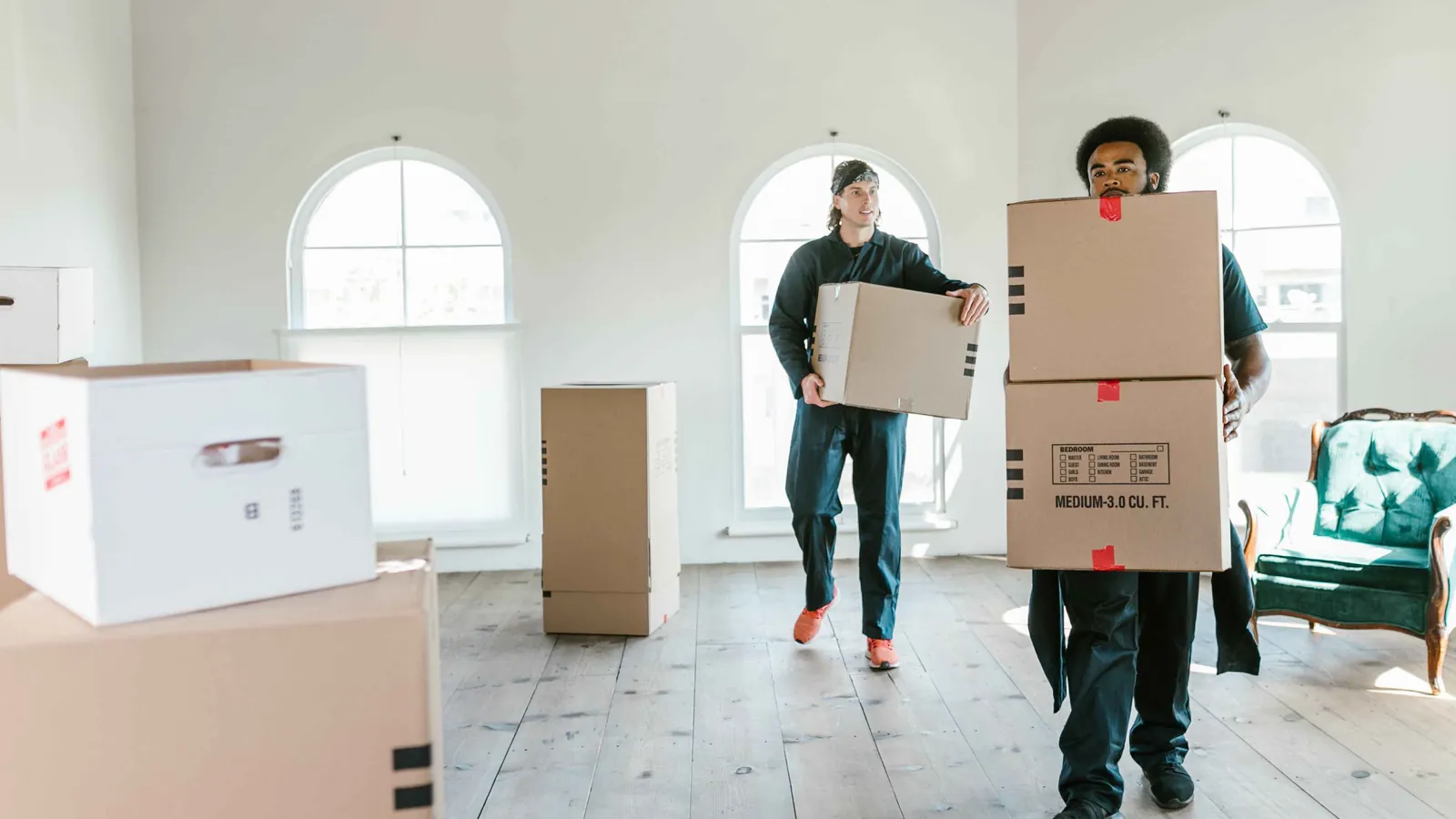
Last-Minute Moving Checklist: How to Move in 72 Hours or Less
Moving in three days or less? Use this last-minute moving checklist to book movers, pack quickly, prepare access, protect essentials, and stay organized.

July 30, 2024
Affordable Last Minute Movers in Vancouver. What You Need to Know For a Quick and Efficient Move
Discover affordable last minute movers in Vancouver and learn how to move quickly and efficiently. Get expert tips and find reliable moving services for your urgent relocation needs.

July 30, 2024
How Senior Movers in Vancouver Handle Downsizing with Care
Learn how senior movers in Vancouver handle downsizing with care, offering personalized moving plans and support services to ensure a smooth transition.